
- Home
- Explore Insurance
- Explore More
- Office Package Policy
- Personal accident policies
- Pet Insurance cover
- Professional Indemnity and Liability including E&O Policy
- Pvt Car TP and CV TP In India
- Shop Insurance
- Standalone OD Policy
- Surety Bond Policy
- Travel Insurance in India
- Two Wheeler Insurance In India
- Wedding or event Insurance Policy
- Workman compensation policy
- About Us
- Contact Us

Fire and special Peril Policy
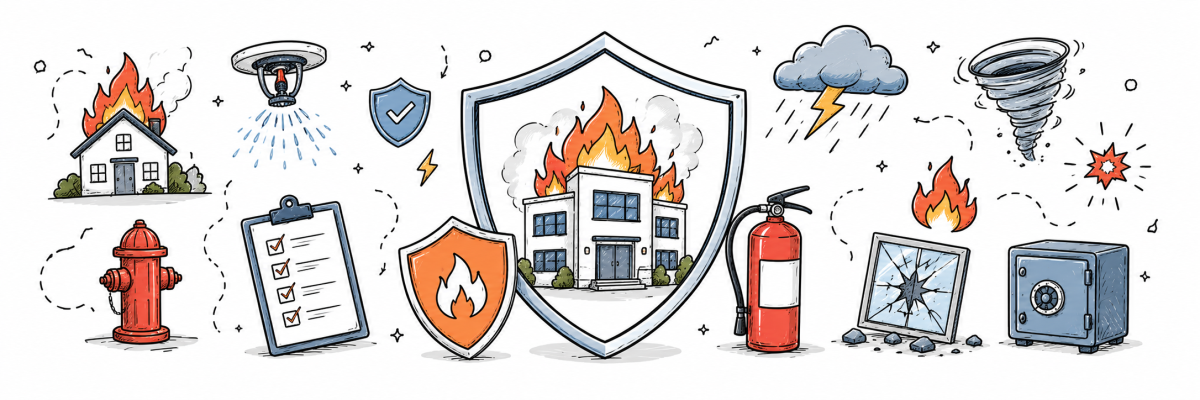
In 2026, fire insurance in India remains a critical risk-management tool governed by IRDAI (Insurance Regulatory and Development Authority of India) guidelines. It primarily covers physical loss or damage to property caused by fire and other “named perils” under standardized product categories.
Standard Fire Product Categories
Since 2021, IRDAI has mandated three standard products based on the total value at risk to simplify coverage for the public:
Bharat Griha Raksha
Designed for home buildings and contents. It automatically covers general home contents for up to 20% of the sum insured (max ₹10 lakh).
Bharat Sookshma Udyam Suraksha
For enterprises with a total value at risk up to ₹5 Crores.
Bharat Laghu Udyam Suraksha
For enterprises where the value at risk is between ₹5 Crores and ₹50 Crores.
Standard Fire & Special Perils (SFSP)
Used for large industrial and commercial risks where the sum insured exceeds ₹50 Crores.
Coverage and Inclusions (Named Perils)
Standard policies cover loss or damage caused by:
Fire & Natural Perils
Lightning, storm, flood, inundation (STFI), landslide, and rockslide.
Social & Man-made Perils
Riot, strike, and malicious damage (RSMD), as well as acts of terrorism (often as an add-on or in-built depending on the policy).
Accidental Damage
Explosion/implosion, aircraft damage, impact by rail/road vehicles (not the insured's own), and bursting/overflowing of water tanks or pipes.
Standard Exclusions
Most policies in India will not cover:
Intentional Acts
Damage caused by willful misconduct or arson by the insured.
Nuclear & War Risks
Loss due to war, invasion, or radioactive contamination.
Electrical Maintenance
Damage to a specific electrical machine caused by a short circuit (though the resulting fire damage to other property is covered).
Vandalism/Theft
Theft during or after the fire incident (unless specific burglary riders are added).
Key Features for 2026
Basis of Sum Insured
Property is usually insured on a Reinstatement Value (replacement cost) or Market Value (depreciated cost) basis.
Average Clause
If a property is under-insured (insured for less than its actual value), the claim amount is reduced proportionately to the degree of under-insurance.
Add-on Covers
Insured can pay extra for covers like earthquake, forest fire, loss of rent, debris removal, and professional fees for architects or engineers.